The housing market has seen dramatic shifts over the past decade, but one style has quietly risen to become the defining aesthetic of mid-to-high-end residential construction: transitional homes. Neither rigidly traditional nor aggressively modern, transitional style homes occupy a sophisticated middle ground that appeals to a wide and growing segment of affluent buyers.
In 2026, this design philosophy is not just popular; it has become the default language of custom home design across the country.
What Makes Transitional Homes So Appealing to Today’s Buyers
At its core, a transitional home blends the warmth and architectural detail of traditional design with the clean lines and open-concept thinking of contemporary style. The result is a home that feels timeless rather than trendy, which is precisely what high-net-worth buyers want when making a multi-million-dollar investment.
Today’s buyers are more design-savvy than ever. They have spent years scrolling through platforms like Houzz and Pinterest, and they arrive at their builder consultations with clear aesthetic preferences. What they consistently gravitate toward is the transitional look: neutral palettes, mixed materials, refined hardware, and spaces that feel both livable and elevated. Transitional style homes deliver all of this without forcing a homeowner to commit to a style that might feel dated in five years.
There is also a practical dimension to the appeal. Transitional homes are extraordinarily versatile when it comes to interior furnishing. Because the architecture does not demand a strict historical vocabulary or a hyper-minimalist approach, homeowners can mix furniture styles, art, and accessories with freedom. This flexibility is a major selling point, particularly for buyers who have collected pieces over time and want a home that can accommodate their evolving tastes.
The Role of Custom Home Builders in the Transitional Movement
Transitional home builders have played a central role in making this style the dominant force it is today. Unlike production builders who rely on fixed floor plans and limited finish packages, custom home builders have the creative flexibility to execute the nuanced detailing that defines transitional architecture. Crown molding with a modern profile, shaker-style cabinetry paired with sleek quartz countertops, wide-plank hardwood floors running beneath coffered ceilings; these are the kinds of combinations that require skilled craftspeople and experienced design teams.
The best transitional home builders understand that this style is not simply about picking elements from two different design worlds and combining them. It is a discipline that requires proportion, restraint, and an eye for how materials and textures interact. A poorly executed transitional home can feel indecisive or incoherent. A well-executed one feels inevitable, as though no other combination of elements could have worked better.
Custom home design firms that specialize in the transitional aesthetic have also benefited from advances in technology. Three-dimensional rendering tools and virtual reality walkthroughs allow buyers to see exactly how their home will look before a single foundation is poured. This has reduced uncertainty and increased buyer confidence, which in turn has driven more investment into the custom transitional segment.
How the Open Floor Plan Became the Structural Foundation of Transitional Living
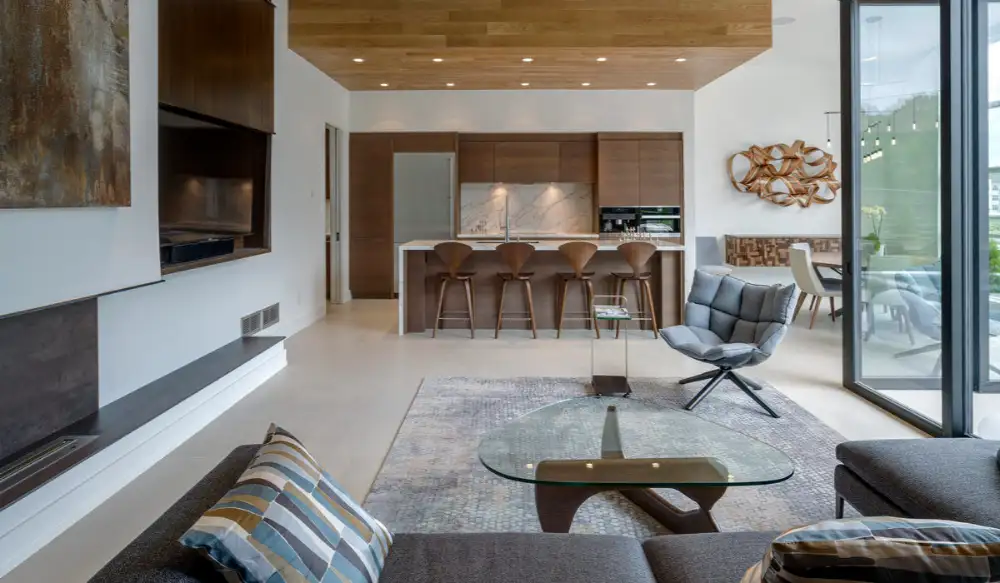
One of the reasons transitional homes have resonated so strongly with mid-to-high-end buyers is that the style is architecturally aligned with the modern lifestyle. Open floor plans, which have been standard in new construction for years, find their most sophisticated expression in transitional design. The absence of walls between kitchen, dining, and living areas demands a visual cohesion that transitional style naturally provides.
When a great room flows into a chef’s kitchen without a dividing wall, the finishes and materials need to speak to one another in a unified language. Transitional design provides that language. The kitchen cabinetry can echo the built-in shelving in the adjacent living room. The stone used for the kitchen island can reappear at the fireplace surround across the room. This kind of thoughtful repetition creates a sense of harmony that makes large, open spaces feel curated rather than cavernous.
Transitional style homes also integrate indoor-outdoor living with exceptional grace. In warmer markets like California, Texas, Arizona, and Florida, buyers expect seamless transitions between interior living spaces and outdoor entertaining areas. Sliding glass wall systems, covered loggias, and outdoor kitchens have become standard features in high-end custom home design, and the transitional aesthetic handles these elements with a natural fluency that more rigidly styled homes sometimes struggle to achieve.
Transitional Design in the Context of Rising Material and Labor Costs
The economic environment of 2026 has not slowed demand for transitional homes; it has actually reinforced their appeal. With construction costs elevated across the country, buyers who are spending significant money on custom home design want to ensure their investment holds its value and remains desirable to future buyers. Transitional homes offer exactly this kind of longevity.
Real estate professionals consistently report that transitional style homes hold their resale value better than homes with strong stylistic identities tied to a specific moment in time. Ultra-contemporary homes with stark minimalist interiors can feel cold to some buyers, while deeply traditional homes may feel formal and high-maintenance to younger generations. Transitional homes thread this needle elegantly, appealing to a broader buyer pool at the point of resale.
Transitional home builders have also responded to the cost environment by developing smarter material specifications. High-quality, cost-effective alternatives to luxury finishes have improved dramatically in recent years. Luxury vinyl plank flooring, for instance, now rivals hardwood in appearance and durability. Quartz countertops continue to evolve in their visual complexity. These advancements allow transitional home builders to deliver the aesthetic their clients expect at price points that work within tighter budgets, extending the style’s reach beyond the ultra-luxury tier and firmly into the mid-market custom segment.
The Future of Transitional Homes in Custom Home Design
Looking ahead, the dominance of transitional homes in the custom and semi-custom markets shows no signs of fading. If anything, the aesthetic is maturing and deepening. Designers and builders are pushing the vocabulary of transitional style homes in more regional directions, incorporating local materials, climate-specific architectural elements, and regionally inspired craftsmanship into what was once a fairly universal template.
In the Pacific Northwest, transitional homes are increasingly incorporating natural wood tones and stone sourced from the region. In the Southeast, the transitional vernacular is evolving to include more classical proportions and traditional millwork details. In the Southwest, earth tones and adobe-inspired textures are finding their way into transitional custom home design. This regional evolution is a sign of a style that has achieved genuine maturity and is now sophisticated enough to absorb local influences without losing its essential character.
Sustainability is also becoming a defining feature of the next generation of transitional homes. Energy-efficient systems, solar integration, and responsibly sourced materials are increasingly expected by buyers in the mid-to-high-end segment. Transitional home builders who can deliver beautiful, livable, sustainable homes are positioning themselves at the leading edge of where the market is heading.
Conclusion
Transitional homes have earned their place at the top of the mid-to-high-end housing market not through trend cycles or marketing, but through a genuine alignment with how people want to live. The style is flexible, timeless, and well-suited to the open, connected floor plans that modern families prefer. Custom home design firms and transitional home builders who master this aesthetic are meeting buyers exactly where they are, and the market is rewarding them for it. As 2026 continues to unfold, transitional style homes remain the most reliable expression of residential sophistication available to today’s buyer.
Need a Luxury Custom Home Builder Near You?
At Principle Builders Group, we believe your home should be a true reflection of your vision, lifestyle, and aspirations. Whether you are planning a custom luxury home, a major renovation, or exploring the possibilities for your property, our experienced team is here to guide you every step of the way. Contact us today to discuss your ideas and discover how our collaborative approach, innovative craftsmanship, and commitment to excellence can bring your dream home to life.